Under
Construction

Something is being built here.
Check back soon, or enter to preview.

Scroll

Marketing & Brand Designer

Ray
Truong

Brand identity, print collateral, and marketing systems — crafted from concept to creation for clients across real estate, hospitality, and lifestyle industries.

Illustrator Photoshop InDesign After Effects Premiere Pro

Design is strategy made visible.

I'm Ray Truong, a marketing and brand designer based in Denver, CO. I specialize in brand identity systems, print collateral, and promotional design — translating business goals into visual experiences that communicate clearly and leave a lasting impression.

My work spans industries: luxury real estate, food & beverage, automotive, and beauty. Every project starts with understanding the problem, and ends with something that earns its place in the world.

Proficient in the full Adobe Creative Suite — Illustrator, Photoshop, InDesign, After Effects, and Premiere Pro — with a marketer's mindset applied to every design decision.

Projects

Designs by Ray Truong

Get in touch

Let's make something
worth keeping.

Availability

Open to full-time roles

Focus

Design · Marketing · Brand

✓ Message sent! I'll be in touch soon.

Projects

A complete view of selected brand, print, and marketing work.

Category
Luxury Real Estate
Deliverables
Flyers · Brochures · Gift Package
Format
Print Collateral System
Market
Parker, CO

Opportunity Knocks

A well-respected, high-end luxury realtor in Parker, CO sought out my professional services through a referral, and presented an exciting opportunity to design marketing collateral for their custom million-dollar listings.

Each listing had an impressive amount of square footage to cover. To adequately highlight every detail, we created multiple contemporary themed templates paired with crisp, professional photography and 3D renderings.

The goal wasn't solely focused on using the flyers to sell the properties — because they sold themselves. Instead, we aimed to curate an experience with something memorable and worth keeping for many years.


Simplicity

#262E38
Navy
#BAB279
Pale Gold
#FFFFFF
White

Navy and pale gold — a pairing that signals enduring luxury without being loud about it. The palette was drawn from the timeless aesthetic of high-end real estate brands: restrained, confident, and built to outlast any trend.

Typography was equally deliberate. Script typefaces were reserved for property names and headline moments — communicating occasion and warmth in a way that a geometric sans never could. Spaced serif caps handled addresses and section labels, balancing that warmth with authority. The rule was simple: if a typeface choice couldn't justify itself, it was cut.


The Mark

Sterling's logotype needed to feel established — not newly minted. The structured emblem paired with a clean serif wordmark projects stability and craftsmanship, values that define both the brand and the homes they build.

Used consistently across every piece of collateral — navy on white, or reversed white on navy — the mark became the visual throughline. A buyer holding a Lot 19 flyer and a Lot 26 brochure should feel they're holding two pieces of the same story.

Sterling Custom Homes logo

5715 Hidden Oaks Way · Parker, CO

An elegant, spacious custom home with an oversized 4-car garage. Professional photography and 3D renderings captured every finish and detail — forming the visual foundation for all marketing collateral. Every shot was scoped to a specific layout need before the shutter clicked.

Professional photography + 3D architectural renderings, briefed to collateral layout requirements.


Front Panel. Back Panel. One Story.

The property flyer was the primary touchpoint — often the first and only piece of print a prospective buyer would hold. The design brief was straightforward: the front should sell the dream, the back should answer the questions.

Front panels led with full-bleed hero photography, a script property address headline, and a clean stat lockup covering beds, baths, square footage, and price. The layout communicates everything at a glance without reading like a spec sheet. The back panel switched modes entirely: detailed floor plans for both the main level and basement. Buyers in the million-dollar range aren't deciding on aesthetics alone — they're making a spatial and lifestyle decision.

Lot 19 — Front

Front — Full-bleed photography · Stat lockup

Lot 19 — Back

Back — Floor plans · Main level + Basement


One Template. Every Listing.

The flyer was designed as a repeatable system, not a one-off. Different photography, different addresses, different price points — but the same structural DNA: navy header, script property name, photo grid, stat lockup. Whether picking up a Lot 19 or a Lot 26 flyer, the brand read as Sterling instantly.

Lot 19

Lot 19

Lot 25

Lot 25

Lot 26

Lot 26


Majestic Oak · Parker, CO

Beyond the standard lot flyers, individual property sheets were produced for each home along Majestic Oak Drive. These served as leave-behinds for open houses — designed for a buyer already walking the property and considering the purchase. The format was more detailed, more photography-forward, and carried the same brand language as every other Sterling piece.

9609 Majestic Oak Dr

9609 Majestic Oak Dr

9660 Majestic Oak Dr

9660 Majestic Oak Dr

9746 Majestic Oak Dr

9746 Majestic Oak Dr

9719 Majestic Oak Dr

9719 Majestic Oak Dr


Building the system

01

Discovery + Photography Brief

Every project started with understanding the property — its differentiating features, target buyer, and price positioning. The photography brief was built around the collateral needs, not the other way around. Hero shots, interior details, and 3D rendering angles were all scoped to specific layout requirements before a single shutter was clicked.

02

Layout + Typography System

Templates were built in Illustrator with a live type system — swapping a property address or stat updated the entire layout instantly. This made producing multiple lots fast without sacrificing consistency. Each piece was press-ready at 300 DPI with correct bleed, crop marks, and CMYK color profiles throughout.

03

Press Proofing + Delivery

Every piece was proofed on-press before distribution — ensuring the navy printed rich and deep, and the pale gold retained its warmth under commercial printing conditions. Final files were delivered as press-ready PDFs with embedded fonts and verified color output across all listings.

04

Buyer Gift Package

Beyond print, a curated closing gift was designed to celebrate the milestone: a personalized wine bottle, assorted chocolates, and a handwritten thank you card — presented as a unified experience to deepen the emotional resonance of the transaction. The goal was to make the moment as memorable as the home.


What was produced

📄
Property Flyers
8.5" × 11" · Double-sided · Lots 19, 25 & 26
🏠
Property Sheets
Individual leave-behinds · 4 Majestic Oak homes
🗺
Floor Plan Layouts
Main level + Basement · Per listing
📋
Bi-Fold Brochure
11" × 17" · Photography-forward interior spread
🎁
Buyer Gift Package
Wine · Chocolates · Personalized card
Brand System
Repeatable template · Consistent across all listings

Category
Restaurant Branding
Deliverables
Logo · Menu · Website · Campaign
Tagline
Every roll tells a story
Campaign Cadence
Refreshed quarterly

A brand built from zero

Opportunities to develop and design an entire brand from concept to reality don't come around often. I sought to challenge myself — expanding my creativity and marketing expertise by building a sushi restaurant capable of competing with the most vibrant and iconic Asian culinary destinations in Houston, TX.

Sushi options in big cities are often overwhelming, with endless menu choices and interchangeable aesthetics. The strategy here was different: a carefully curated selection of limited offerings, made entirely from the highest-quality ingredients, paired with a dining experience so considered it becomes worth sharing on social media.

Every decision made — the name, the logo, the menu architecture, the campaign system — had to reinforce a single idea: that dining at Kasata is an event worth remembering.


A word that means nothing — and everything.

The word "Kasata" came to mind when envisioning a high-end sushi den. Like brands such as Google or Nvidia, it isn't a real word — and that's precisely the point. It carries no prior associations, no baggage, no preconceived meaning.

That blank canvas is one of the most powerful things a brand can have. From the very first interaction, every meaning attached to "Kasata" would be built by design — through the logo, the menu, the experience, the story told across every touchpoint.

Kasata sushi rolls

Dark, Bold, Deliberate

#9E2A20
Deep Red
#0D0D0D
Black
#FAFAF8
White

Red and black — the palette of confidence, appetite, and drama. Deep red signals the premium and the visceral; black provides the stage. Together they communicate the kind of restaurant where the atmosphere is as intentional as the food.

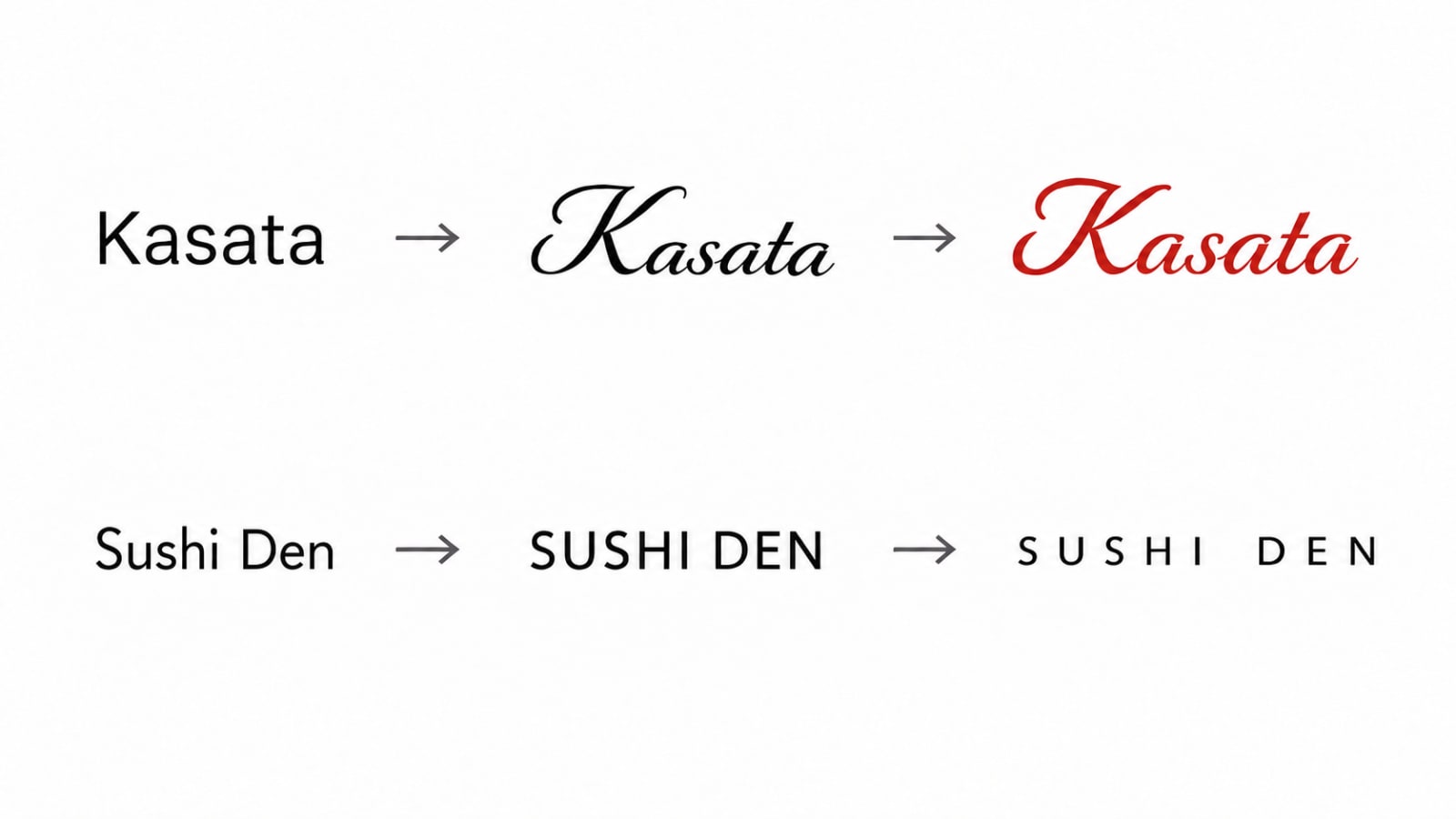
Typography followed the same logic. Arabella, a flowing calligraphic script, carries the warmth and occasion of the brand name. Myriad Variable Concept — a clean, spaced sans — handles everything functional: "Sushi Den," menu headers, campaign type. One voice for emotion, one for information.


Designing the logo

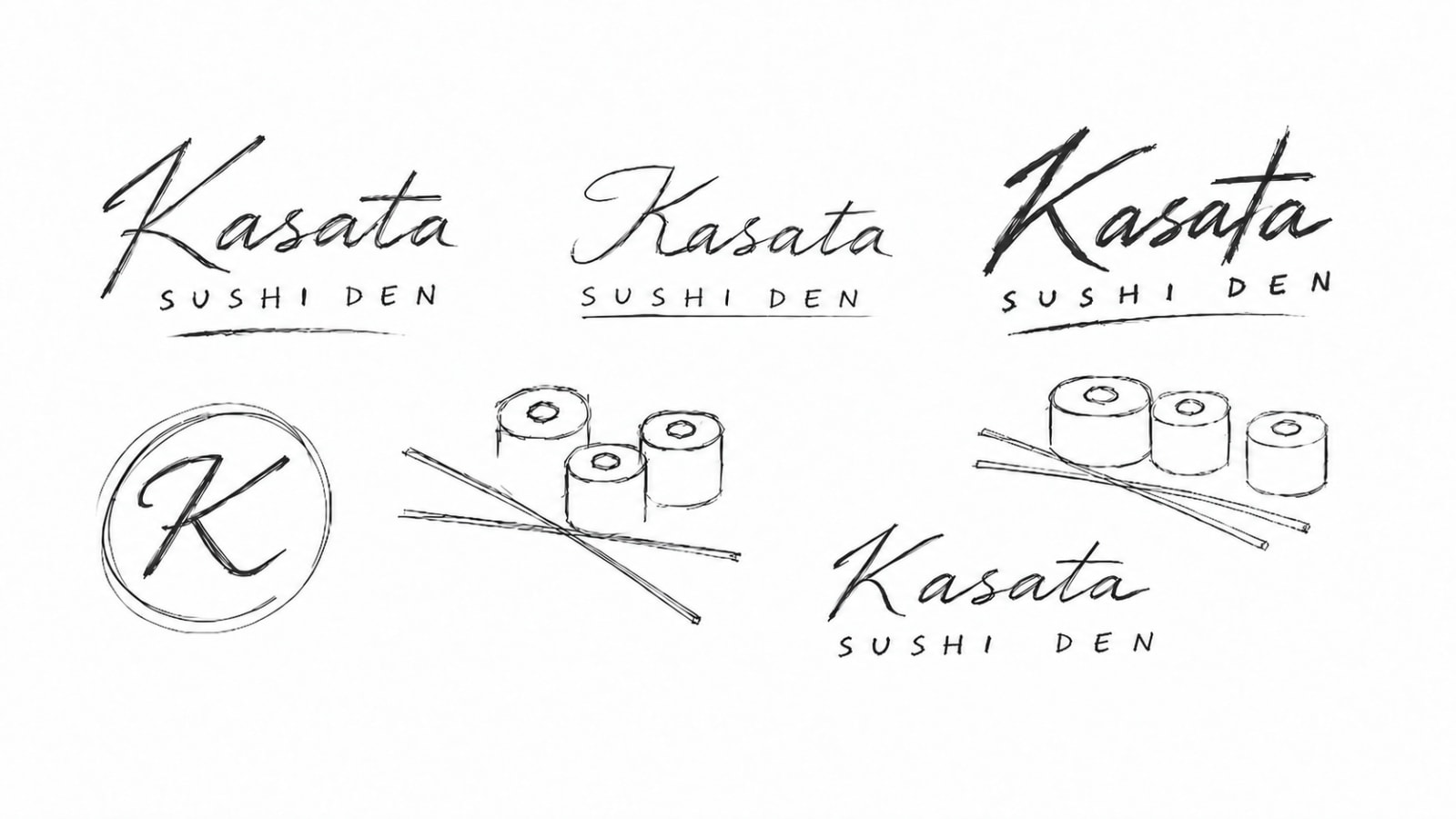
The mark combines a calligraphic script wordmark (Arabella), a spaced capital sub-brand (Myriad Variable Concept), and a supporting icon — three elements that work independently or as a full lockup depending on context.

Kasata
plain text
𝒦asata
Arabella script
Kasata
+ icon + den
Script wordmark Arabella #9E2A20
Sub-brand · all caps Myriad Variable Concept #000000
Kasata logo variant 1
Kasata logo variant 2
Kasata logo variant 3

Food worth photographing

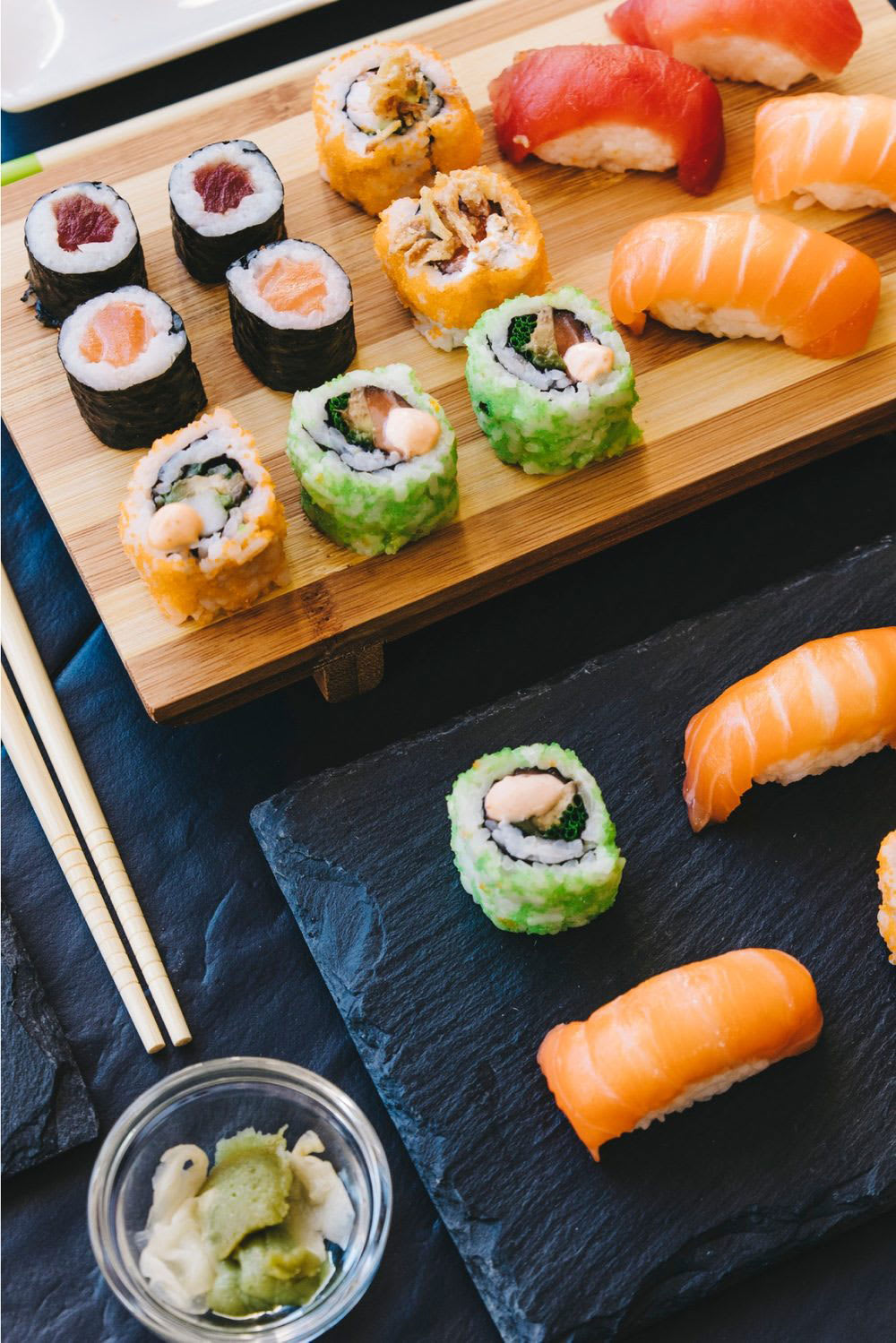
A core pillar of the Kasata brand was designing an experience guests would want to share. In today's market, every great dish is a content opportunity — photography-forward plating and presentation were treated as a brand requirement, not an afterthought. The art direction brief: dark backgrounds, tight crops, studio lighting. Every shot had to earn its place in the feed.

Art direction: dark backgrounds, dramatic lighting, tight crops — every shot optimized for both print and social.

Flat lay with chopsticks

Lifestyle shot — communal dining moment

Philadelphia roll

Philadelphia Roll — Beginner Rolls section hero


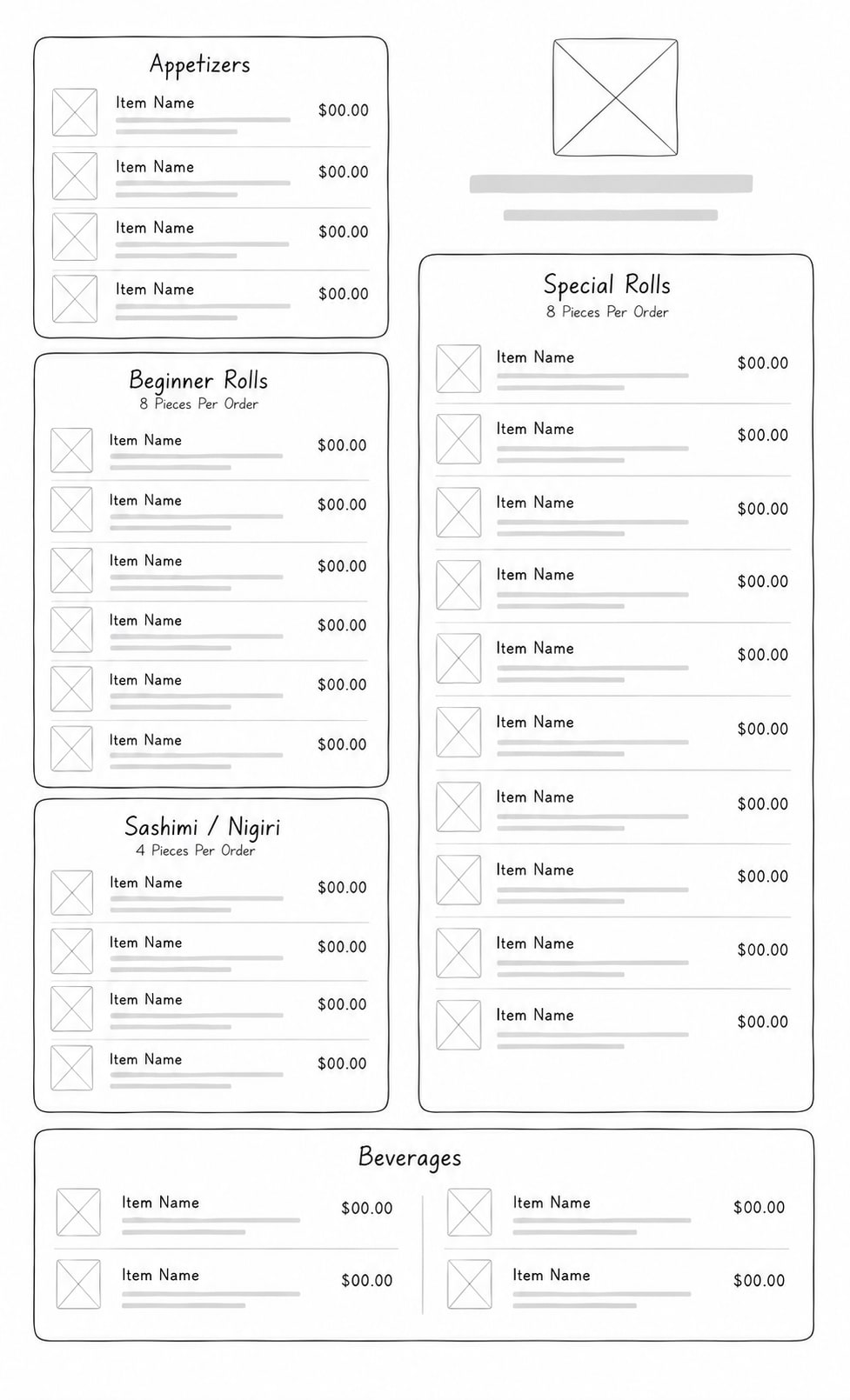
The menu is the sales floor

Menus are the most important sales tool a restaurant has. They're a strategic instrument — not just a list of dishes — that can guide customers toward premium options, increase average check size, and communicate the brand's values in a single glance.

The Kasata menu was built in deliberate tiers: Appetizers and Beginner Rolls as accessible entry points, Sashimi/Nigiri for the experiential diner, and Special Rolls — the house exclusives — positioned as the premium destination. Names like Kasata Dream, King of the Sea, and Cherry Blossom weren't arbitrary; they carried emotional weight and made the menu memorable.

Kasata restaurant menu

8.5" × 14" print menu — tiered architecture, Kasata branding throughout.


Every business is a media company

In today's hyper-digital world, a restaurant's online presence is as important as its physical one. Maintaining an up-to-date website, an active social media profile, and ongoing advertising campaigns isn't optional — it's the operating standard for any brand that intends to grow.

Kasata's digital footprint was designed as a cohesive system: a website with a clear call-to-action structure (reservations, menu, about), a mobile-optimized experience, and an Instagram presence built from the ground up with brand-consistent content strategy and real engagement hooks.

Kasata website design

Website homepage — hero, CTA, navigation

Kasata online presence

Digital presence overview — social + web

Kasata Instagram profile

@KasataSushiDen — Instagram profile build

Kasata digital campaign

Digital campaign assets + ad formats


Content designed to stop the scroll

Every piece of Kasata's social content was designed with one goal: make someone stop mid-scroll and want to visit. The Instagram posts were built around the food — dark backgrounds, close crops, dramatic lighting — letting the photography do the selling. Captions reinforced the brand voice: personal, confident, story-driven.

The @KasataSushiDen profile was set up as a complete brand presence: bio with location and hours, link in bio (Linktree) routing to reservations and the digital menu, and a content grid that reads as cohesive even at thumbnail scale.

Kasata Instagram post

Instagram post — sashimi feature content

Kasata social campaign

Campaign social content — promotional format

Kasata content collage

Full brand content collage — identity, menu, campaigns, and social in one view.


"Every roll tells a story" — the engine of the brand

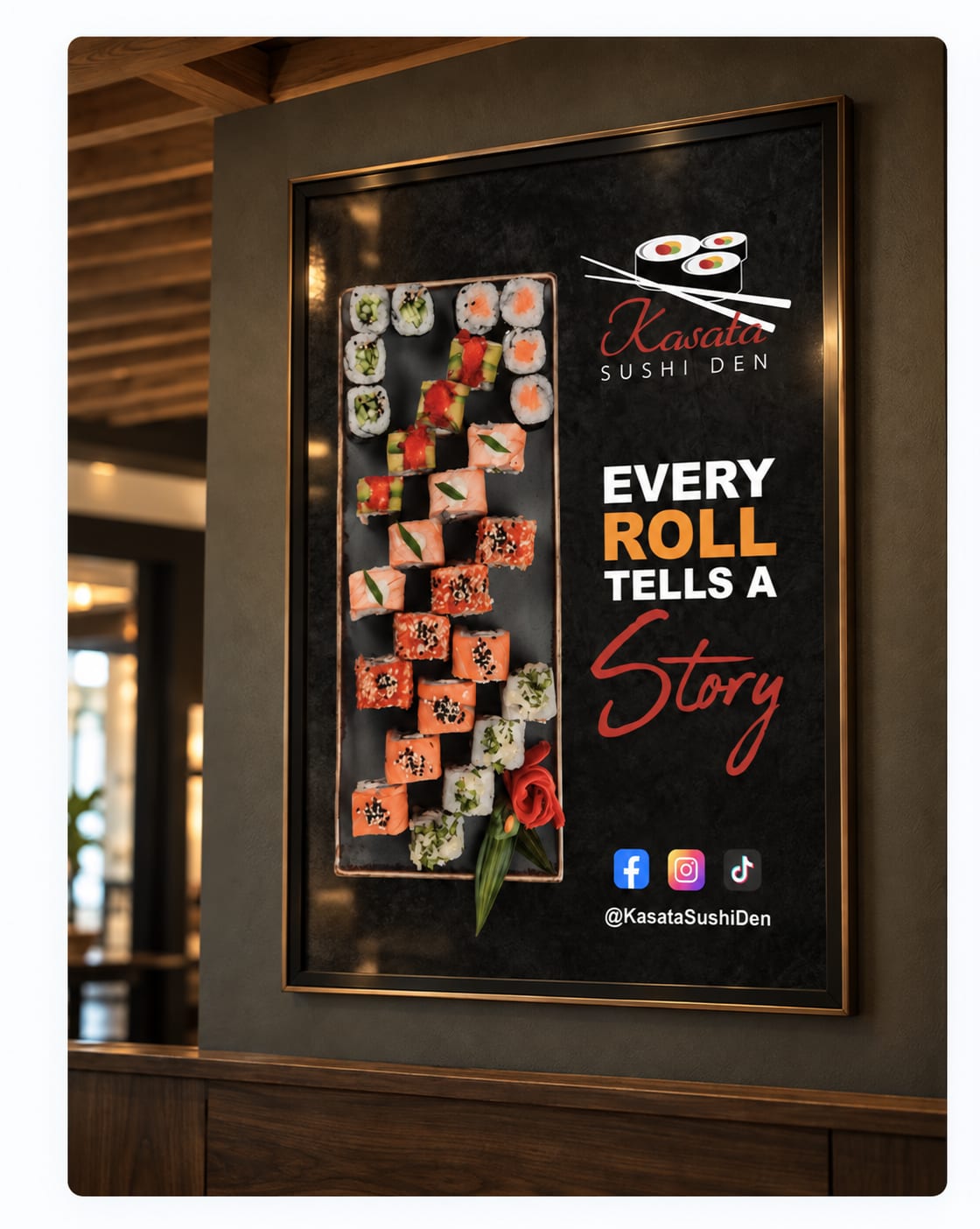
The tagline isn't decorative — it's structural. "Every roll tells a story" gives Kasata an inexhaustible content engine: every new roll on the menu is a new story, a new campaign. A new menu, a new banner, new posters, new social content — refreshed at minimum once a quarter.

This approach keeps the brand alive between visits, gives regulars a reason to return, and creates social media moments that drive organic discovery. Every format was designed as part of a system, not a collection of one-offs — meaning seasonal updates require only swapping the featured roll and its photography. Everything else holds.

Kasata poster design

Poster design — "Every Roll Tells a Story" · QR to digital menu

Kasata Facebook ad campaign mockup

Social ad — Facebook campaign mockup

Bus stop ad

Bus stop — outdoor advertising

Kasata promotional banner — opening launch

Banner — opening launch campaign

Kasata table tent display in-store

Table tent — in-store display


From blank canvas to brand

01

Naming + Brand Strategy

Everything started with the name. "Kasata" was chosen for its invented nature — no cultural baggage, no competing associations. From there, a brand strategy was defined: premium but accessible, curated over comprehensive, social-media-native. Every subsequent decision was evaluated against this foundation.

02

Logo Design + Identity System

The logo was developed in multiple iterations — from plain wordmark to Arabella script to the final three-element lockup. The result was a flexible system: a full logo for formal applications, a wordmark-only for digital, and an icon for small-format use. Red and black established the identity's emotional range.

03

Menu Architecture + Print Design

The menu was engineered as a sales tool before it was designed as a document. Tier structure, naming conventions, price anchoring, and section sequencing were all mapped before a single layout decision was made. The final 8.5" × 14" print menu carried the full brand identity in every typographic and visual choice.

04

Digital Presence + Campaign System

With the identity established, the brand extended outward: website, mobile, Instagram, and a quarterly campaign framework built around "Every roll tells a story." Every format — poster, banner, billboard, postcard, social post — was designed as part of a single cohesive system, not a collection of one-offs.


What was produced

Logo System
3 variants · script · lockup · icon
📋
Restaurant Menu
8.5" × 14" · tiered architecture · full pricing
🌐
Website Design
Homepage · About · Menu · Mobile
📱
Instagram Profile
@KasataSushiDen · bio · content strategy
🪧
Billboard · Banner
Opening launch campaign · outdoor formats
🚏
Bus Stop Ad
Outdoor advertising · launch campaign
📮
Postcard / Print Ad
Quarterly campaign print + digital formats
🖼
Poster · Flyer
In-store + outdoor signage · social QR
🗓
Campaign Framework
Quarterly refresh system · menu · assets · social

Vehicle
2018 Jeep Grand Cherokee
Colors
Factory White + Brand Orange
Coverage
Both sides · Rear liftgate · Windshield
Industry
Garage Floor Protection

One of the largest projects I've worked on

Garage Cave specializes in garage floor protection, and the assignment was to turn their 2018 Jeep Grand Cherokee into a moving advertisement the owners could drive around town. The wrap needed to be vibrant enough to catch attention quickly, but clear enough that the brand, phone number, and core service benefits could be understood in motion.

This became one of the largest production-oriented projects in my portfolio because every design choice had to survive the realities of a vehicle template: curved panels, door breaks, window placements, limited rear surface area, and artwork that would eventually be handed to a professional installer.

4x
Stronger Than Epoxy
1 Day
Garage Floors
UV
Resistant Coating

Building the foundation

#F57C00
Brand Orange
#FFFFFF
Factory White
#2B2B2B
Vehicle Trim

The foundation was simple: match the factory white paint as closely as possible, then layer Garage Cave's orange over it. The split between those colors could not feel like a basic stripe; it needed to feel fast, expressive, and custom to the company.

That decision led to a layered gradient pattern system. Orange, amber, red-orange, and white could shift depending on angle and scale, giving the livery motion without letting the background overpower the phone number or promotional claims.

Color palette and pattern development

Color palette development — factory white, brand orange, and the gradient system used to separate both surfaces.


Drafting the livery

Each pattern direction started from the gradient work above. By repeating and overlaying the newly colored swashes at different angles and sizes, the wrap could change energy depending on where it landed on the vehicle.

After several iterations, the base pattern became the visual language of the entire wrap: energetic, directional, and bold enough to carry the orange across large panels while still leaving room for the vehicle's factory white to breathe.

Livery development

Livery development — building from a blank 2018 Jeep Grand Cherokee template into the base wrap direction.


Messages built for a passing glance

The wrap needed to do more than look exciting. A few key phrases had to be bold and flashy enough to make someone stop and take a second look: "100% Polyaspartic," "1 Day Garage Floors," "UV Resistant," "Low VOC," and "4x Stronger Than Epoxy."

Those claims were treated like outdoor advertising, not body copy. They were scaled for distance, placed near the highest-visibility side panels, and balanced against the logo and phone number so the vehicle could communicate in a single glance.

5
Key Claims
Carl
Mascot Moment
30"
Logo Scale

Carl, the company mascot, was placed in the rear passenger window to add personality and make the brand feel more memorable from the side view.

Promotional graphics applied

Promotional graphics applied to the passenger side — value propositions, phone number, and Carl in the window.


Solving the liftgate

Compared with the sides, the rear liftgate had much less usable surface area. The graphics had to be modified to fit around the license plate, lights, logo placement, and rear glass while still reading as part of the same livery system.

The rear windshield became part of the solution. A metal sheet pattern from a prior project was adapted, paired with the logo and Carl, then intended for perforated adhesive vinyl: opaque from the outside, see-through from the inside, similar to a one-way mirror.

Rear liftgate and windshield design

Rear liftgate design + perforated rear windshield treatment, rebuilt around the vehicle's limited rear surface area.


The finished vehicle

After the final pattern, promotional graphics, rear treatment, and finishing details were resolved, the artwork was sent to a professional installer. The result was a full-vehicle brand system that could promote Garage Cave from every angle: driver side, passenger side, and rear.

Final car wrap result — all views

Final result — driver side, passenger side, and rear liftgate views.


From foundation to install-ready files

01

Color + Pattern Development

Matched the factory white paint as closely as possible, then built a custom orange gradient system from layered vector swashes. The goal was a transition that felt energetic without turning the vehicle into visual noise.

02

Vehicle Template Application

Applied the pattern to a 2018 Jeep Grand Cherokee template, adjusting scale and direction across driver and passenger sides so the livery worked with the vehicle's shape instead of fighting it.

03

Promotional Messaging

Built the claim system around short, high-impact messages that could be read quickly: one-day installation, UV resistance, low VOC, and 4x strength compared with epoxy.

04

Rear Graphics + Production Handoff

Modified the graphics for the liftgate and rear windshield, then finalized the wrap artwork for professional installation with every major vehicle view accounted for.


What was produced

🚗
Driver Side Wrap
Pattern + logo + phone + promo copy
🚗
Passenger Side Wrap
Pattern + mascot + promotional graphics
🔲
Rear Liftgate
Separate pattern + key claims
🪟
Rear Windshield
Perforated vinyl · one-way mirror effect
📐
Print-Ready Files
Sent to professional installer

Industry
Spa & Beauty Salon
Services
Nails · Lashes · Brows
Deliverables
Pricing Menu · Tri-Fold · Spa Cards
Spa Packages
8 Signature Experiences

Elevating the brand presentation

Novae Beautique, a spa and beauty salon in Centennial, CO, was undergoing a rebrand and needed new menus to highlight their services and offerings. The goal was to move the experience beyond standard paper menus and into a more polished, premium presentation.

The system needed to solve two different jobs: a practical pricing menu for daily service browsing, and a leather tri-fold presentation for eight signature manicure and pedicure packages. Together, they gave the salon a print suite that felt closer to an upscale bar, hotel, or spa than a typical service list.

9.5"
Pricing Menu Height
14"
Tri-Fold Spread
8
Spa Packages

Preserving the black curtain aesthetic

Novae's website already had a distinctive visual language: a black curtain backdrop, yellow heading type, and white body copy. Rather than replace that personality, the print system translated it into physical collateral.

The pricing menu stayed closest to the website system with Calibri Bold for headings and Calibri for readable service details. The spa package cards introduced Blackjack for expressive package titles, Montserrat Bold for pricing, and Montserrat Light for descriptions.

#241F21
Background
#EBDB00
Heading
#C9A227
Gold Accent
#FFFFFF
Body Copy

A practical menu with a premium finish

The pricing menu was built as a 3.5" by 9.5" double-sided piece that could handle a large range of services without losing clarity: nail enhancements, lashes, permanent makeup, waxing, kids' services, and additional offerings.

The layout kept the hierarchy direct. Yellow headings created fast scanning points against the black background, while white service descriptions and prices kept the dense information readable.

Novae pricing menu front and back

Pricing menu — front and back — preserving the brand's black curtain aesthetic with yellow headings and white body text.


Eight signature experiences

In addition to standard services, Novae offered eight elevated manicure and pedicure packages: Citrus Splash, Good Morning Lavender, Mango Crush, Cucumber Refresh, Hawaiian Sunset, Teavana Secret, Pearl-fection Delight, and Honey "I do."

Each card was treated like its own small campaign. Package-specific photography set the mood, Blackjack added a more expressive title treatment, and the pricing lockup separated mani, pedi, and combo options clearly.

Spa packages overview

Spa package card system — eight signature manicure and pedicure experiences with individual photography and pricing.


A leather tri-fold built for the experience

The tri-fold was the moment where the print system became an object. At 4" by 14", each of the three panels held individual spa package cards, turning the menu into something guests could browse slowly rather than skim quickly.

That upgrade mattered because it matched the service positioning. The holder gave the package cards structure, made the offering feel more curated, and created a more tactile handoff for the client experience.

Leather tri-fold full spread

Leather tri-fold full spread — all eight spa package cards displayed across the three-panel holder system.


Building the menu system

01

Translate the rebrand

Carried the black curtain, yellow heading, and white body-copy system from Novae's website into print so the menus felt connected to the larger brand refresh.

02

Organize the pricing menu

Structured a dense service list into a double-sided 3.5" by 9.5" format with enough hierarchy for quick browsing and enough detail for everyday salon use.

03

Design the package cards

Created a flexible card system for eight signature packages, pairing each offer with its own image, title color, description, and mani/pedi/combo pricing structure.

04

Build the tri-fold experience

Resolved the full 4" by 14" leather tri-fold layout so the cards could sit in their respective slots and read as a premium in-salon presentation piece.


What was produced

📄
Pricing Menu
3.5" × 9.5" · Double-sided · Print-ready
📁
Leather Tri-Fold
4" × 14" · 3-panel holder system
🌿
8 Spa Package Cards
Individual photography · unique heading colors
🎨
Brand Style Guide
Typography · colors · layout specs

Category
Retail Environment
Deliverables
Booths · Fixtures · Panels
Message
Protect Better
Format
Large-Scale Print

A flagship retail environment for phone repair, protection, and accessory sales

This project sits at the center of the print portfolio because it moves beyond a single graphic into a complete physical retail system. The work spans booth concepts, fixture elevations, production panels, installation photography, brand messaging, texture systems, and device-level assets that all had to feel unified once translated into a real shopping environment.

The challenge was scale and hierarchy. A shopper needed to understand "Protect Better" from across the mall, then quickly locate service categories like screens, batteries, frames, and back glass once they reached the counter. The final direction uses a high-contrast red repair band, warm wood surfaces, illuminated ZAGG branding, and clean product panels to turn a dense service offering into a premium, readable fixture.

132"
Primary Header Panel
360
Fixture Visibility
2
Booth Concepts

A warmer retail language for a technical service

Repair and protection graphics can easily become cold or overly technical. This direction intentionally pairs durable materials with clean digital messaging: wood for warmth, deep red for service urgency, white/black for product clarity, and ZAGG green as a controlled accent rather than the dominant surface color.

That restraint gives the system a higher-end tone. The brand still reads immediately, but the environment feels more like a premium service counter than a temporary promotional display.

#74B72E
ZAGG Green
#2A2018
Wood Tone
#8E140B
Repair Red
#FFFFFF
Panel White
Wood texture background

Wood texture direction — a tactile base layer for the service counter.

Protect Better wordmark

Message asset — the expressive headline that anchors the display system.


Designing the retail footprint before designing the graphics

The booth studies show the project beginning as a spatial problem. Before the final panels could be refined, the display needed a logic for towers, counters, sightlines, cabinet surfaces, lightbox areas, and customer-facing service zones.

The graphics are treated as part of the architecture rather than a skin. Red category bands wrap the counter, wood panels ground the fixture, and the ZAGG mark appears in large illuminated moments where it can perform as signage.

ZAGG booth concept front view
Concept 01

Counter-wrap graphics with service hierarchy

The first booth concept defines the customer-facing side of the system: brand mark, repair categories, supporting partner logos, and a wood-backed structure that makes the environment feel permanent and substantial.

ZAGG booth concept alternate view
Concept 02

Alternate angle for signage and circulation

The second concept checks how the system reads from another approach path. It keeps the repair band visible while giving the tower signage enough scale to hold attention across a busy retail corridor.


Every side of the fixture had to keep selling

The freestanding fixture extends the same language into a tighter footprint. Front-facing panels prioritize the repair offer and product clarity, while rear-facing graphics make the display feel complete from every direction instead of leaving the back as dead space.

Template views were kept in the presentation to show the production thinking behind the finished graphics: where panels start and stop, how large type wraps the structure, and how the final artwork maps onto physical surfaces.

ZAGG fixture front

Fixture front — service categories, product panels, and brand surfaces in one view.

ZAGG fixture rear

Fixture rear — a complete secondary face for traffic approaching from behind.

ZAGG front fixture template

Front template — production zones before final graphics are applied.

ZAGG rear fixture template

Rear template — structural mapping for the alternate display face.


Long-format graphics built for real installation constraints

The print assets were not decorative mockups; they were long production pieces that needed to hold up at physical scale. The 132-inch header carries the repair story across the counter, while smaller horizontal panels support secondary surfaces and category moments.

Because these assets would be viewed both up close and at a distance, the layouts rely on strong type scale, simple service grouping, and generous negative space around product and partner marks.

ZAGG 132 inch printable panel

132-inch printable panel — the primary repair and protection message across the fixture.

ZAGG 45 inch printable panel

45-inch printable panel — supporting production artwork for a smaller display surface.

ZAGG wood strip asset

Wood strip — a repeated material asset used to unify the fixture surfaces.

ZAGG phone product visual

Product visual — cracked phone imagery used to make the repair need immediate.


From production file to live retail counter

The installation photography is important because it proves the system survived contact with the real world: bright mall lighting, glass cases, product packaging, neighboring storefronts, countertop clutter, and customers moving through the space.

The finished display still holds its hierarchy. The illuminated ZAGG mark becomes the anchor, the red band gives the service categories a single reading line, and the wood base keeps the counter from feeling like a flat graphic panel.

Installed ZAGG retail counter front Installed ZAGG retail counter detail Installed ZAGG display side view

From structure to retail-ready graphics

01

Map the display footprint

Started with the booth and fixture templates to understand available graphic areas, sightlines, and where product imagery needed to sit.

02

Build the brand environment

Combined wood texture, green accent color, and clean product panels to create a retail environment that felt tactile while still communicating technology.

03

Apply across booth and fixture views

Extended the system from booth-scale layouts to front and rear fixture graphics so the display stayed consistent from every shopper angle.

04

Prepare print assets

Built large-format printable panels and supporting assets with production scale, alignment, and visibility in mind.


What was produced

Booth Concepts
Template and applied display views
Fixture Graphics
Front and rear retail display panels
Printable Panels
Large-format horizontal production assets
Product Assets
Phone imagery and protection messaging
Retail System
Reusable environmental graphic direction